

- Home
- /
- Economic Environment
Economic Environment
Macroeconomic Indicators
According to forecasts, global economic growth rates will remain at a sustainable level and will amount to about 3.3% in 2026, which corresponds to the estimated figure of 3.3% in 2025.
Global inflation is expected to decline from an estimated level of 4.1% in 2025 and further to 3.8 percent in 2026. Global inflation continued to decline after the peak values of previous years. According to estimates, its level decreased to about 5.9% in 2024 and to approximately 4.5% in 2025. At the same time, advanced economies are expected to achieve their inflation targets faster than emerging market and developing economies. Core inflation is declining more gradually, reflecting persistent pressure from domestic demand and the cost of services.
Kazakhstan's economic growth in 2025 amounted to 6.5% in annual terms, with high rates persisting in transport, construction, trade, as well as in the mining and manufacturing industries.
Despite a tighter fiscal policy in 2025, pro-inflationary pressure persists due to the activity of the quasi-state sector. The state budget balance in 2025 resulted in a deficit of 2.7% of GDP, excluding oil revenues – 7.1%.
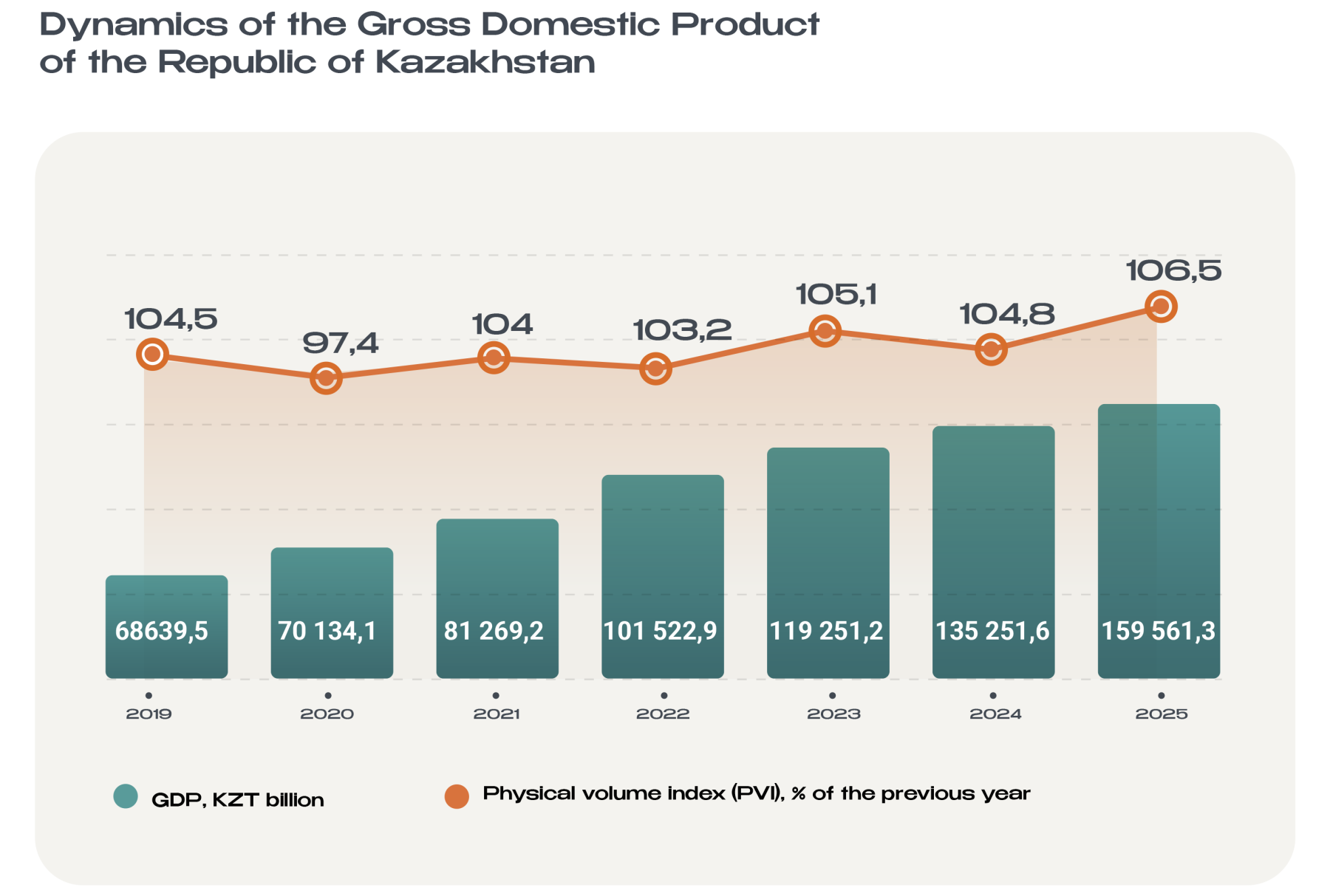
Kazakhstan's Gross Domestic Product (GDP) based on the results of 2025 grew by 6.5%, accelerating compared to the growth at the level of 4.8% in the previous year.
By the end of 2025, the tenge exchange rate strengthened to 502.57 per USD. This was driven by a number of factors, including foreign currency sales from the National Fund, the introduction of a mirroring mechanism for gold operations, the mandatory sale of foreign currency revenues by companies in the quasi-state sector, as well as the temporary suspension of currency purchases for the UAPF.
The country's population as of January 1, 2026, stood at 20,495.9 thousand people, including an urban population of 13,029 thousand (64%) and a rural population of 7,466.1 thousand (36%) people. Compared to January 1, 2025, the population size increased by 195.3 thousand people or 0.96%.
The median wage (the central level of the salary range) in the Republic of Kazakhstan for the IV quarter of 2025 amounted to 339,912 tenge. The average monthly nominal wage (excluding small enterprises engaged in entrepreneurial activity) amounted to 473,158 tenge. The nominal wage index compared to the corresponding quarter of the previous year stood at 108,8%, and in real terms – at 96.8%.
The total area of the housing stock over 2025 amounted to 447.3 million sq. m, including 297.9 million sq. m in urban areas and 149.3 million sq. m in rural areas. Compared to the previous year, the area of the housing stock increased by 13 million sq. m.
Housing provision per resident over 2025 amounted to 25.1 sq. m, including 27.4 sq. m in urban areas and 21.3 sq. m in rural areas. Compared to the previous year, the indicator increased by 0.6 sq. m.

Key Indicators of the Banking Sector
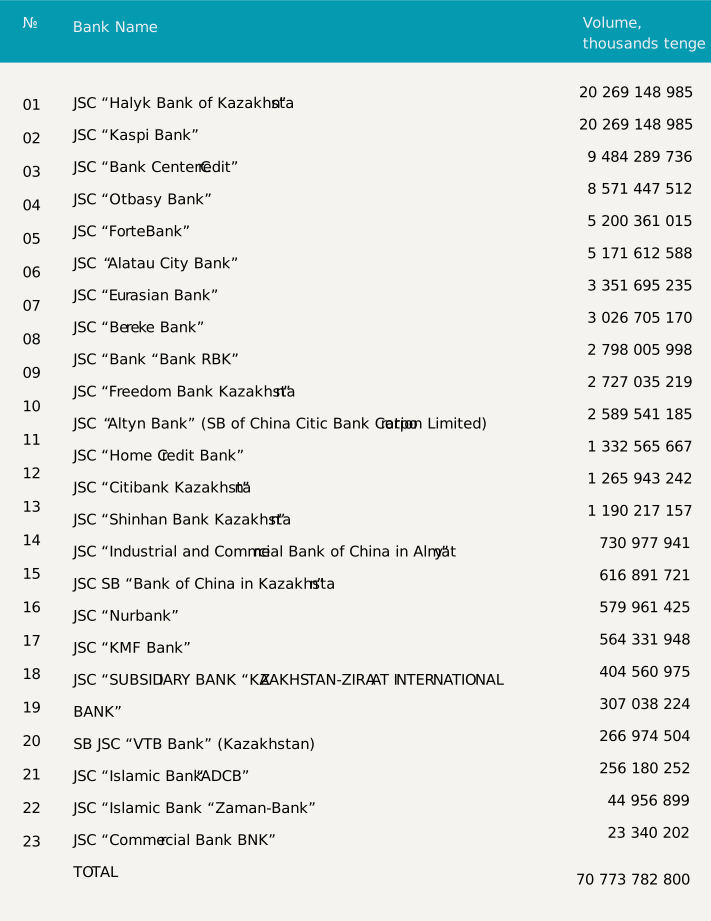
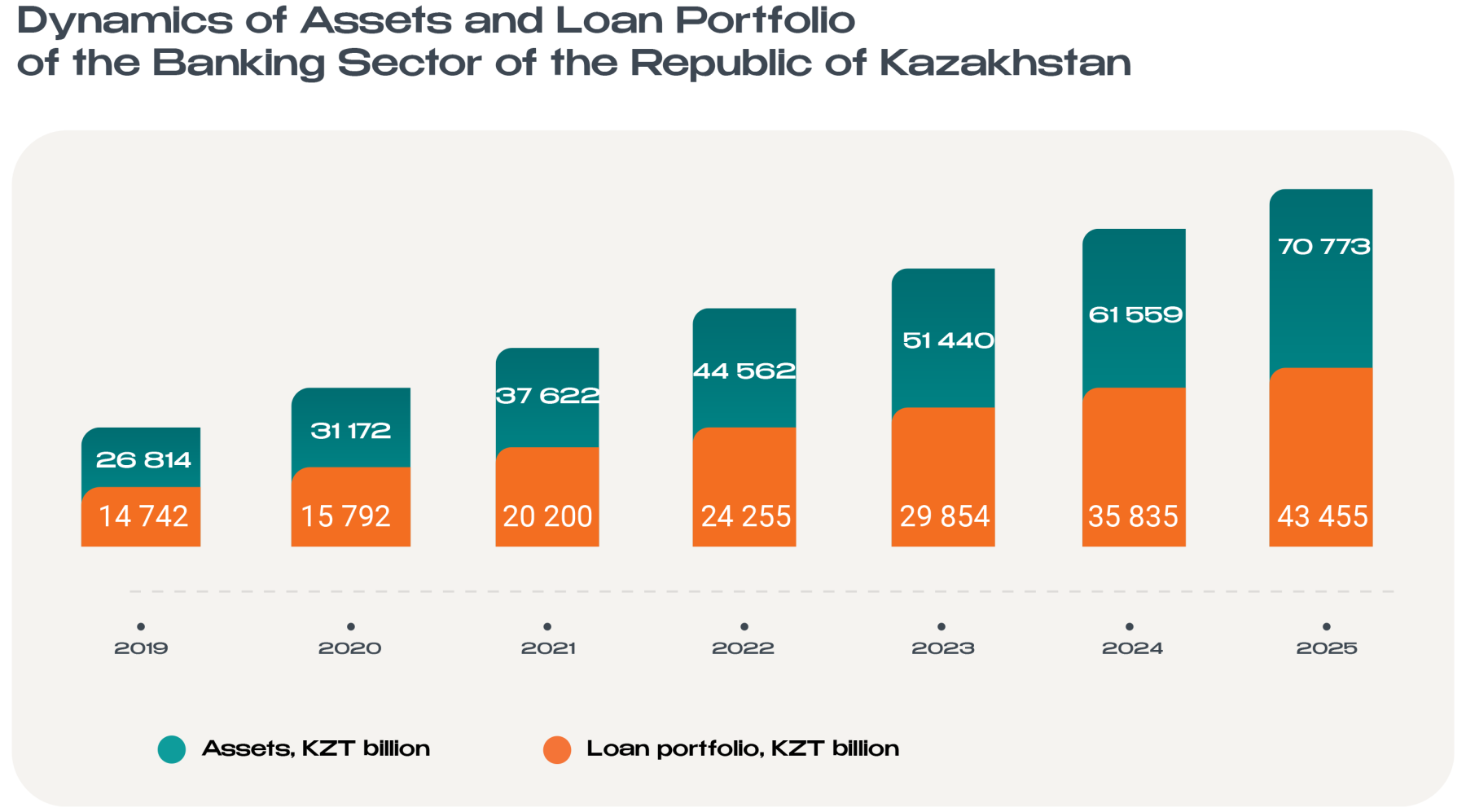
As of the end of 2025, the banking sector of the Republic of Kazakhstan is represented by 23 second-tier banks. The aggregate assets of STBs in the past year increased by 15% and amounted to Tenge 70.8 trillion.
Assets of second-tier banks as of 01.01.2026:
In the structure of aggregate assets, the largest share is held by the loan portfolio – 61%. In 2025, the volume of the banks' loan portfolio increased by 21.2% to Tenge 43.5 trillion as of 01.01.2026.
Loans to the economy issued by second-tier banks increased by 19% over 2025 to Tenge 40.2 trillion (growth for 2024 was 21%).
In fact, Otbasy Bank has recently been the only active participant in the mortgage market among second-tier banks. The volume of the Bank's loan portfolio in 2025 grew by 16% – from Tenge 3.4 trillion to Tenge 4 trillion (growth for 2024 was 6%). 58% of the volume of loans for housing construction and acquisition was issued by Otbasy Bank.
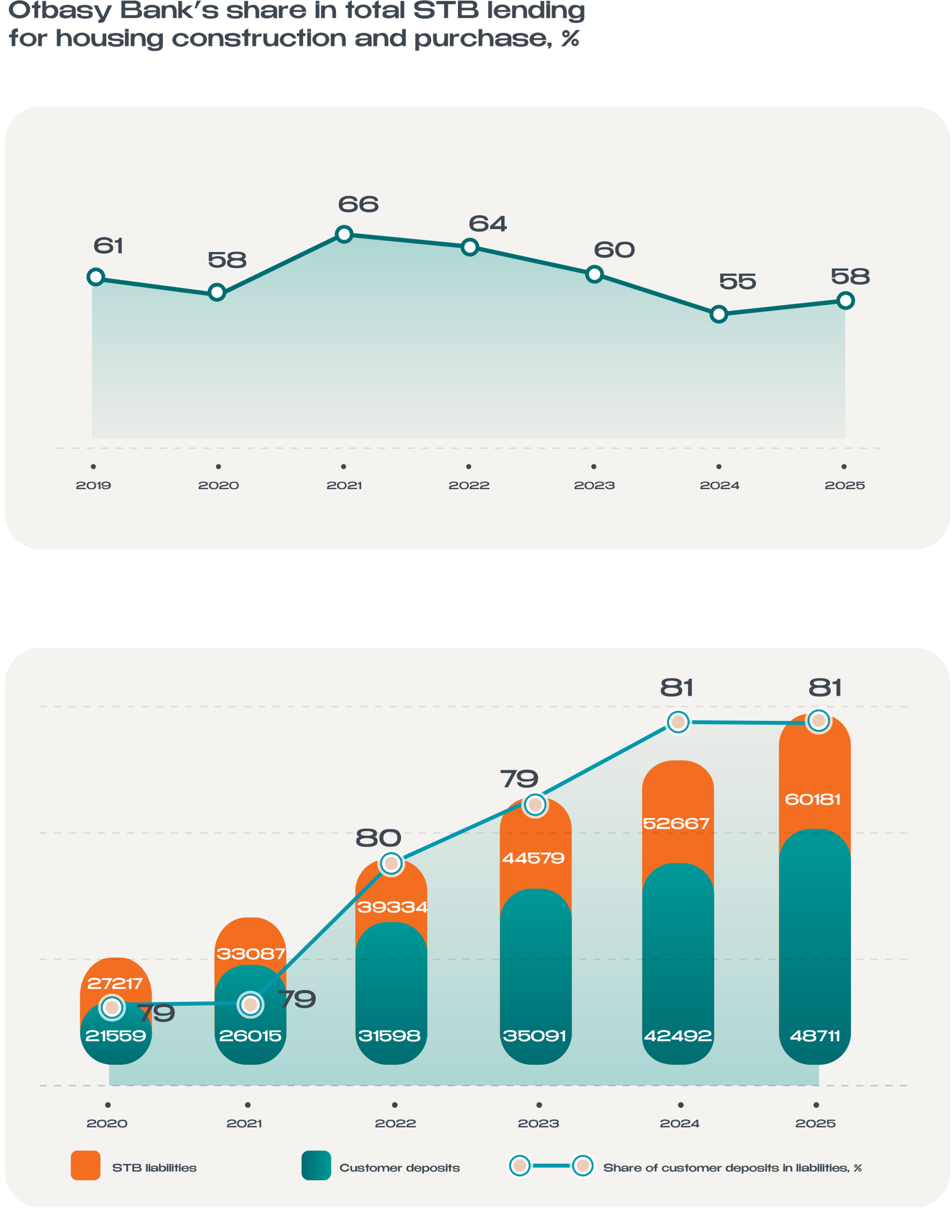
Deposits of the population in all STBs in 2025 grew by 16% and amounted to Tenge 27,820 billion, while in Otbasy Bank the volume of deposits grew by 22% (from Tenge 2,424 billion as of 01.01.2025 to Tenge 2,957 billion as of 01.01.2026).
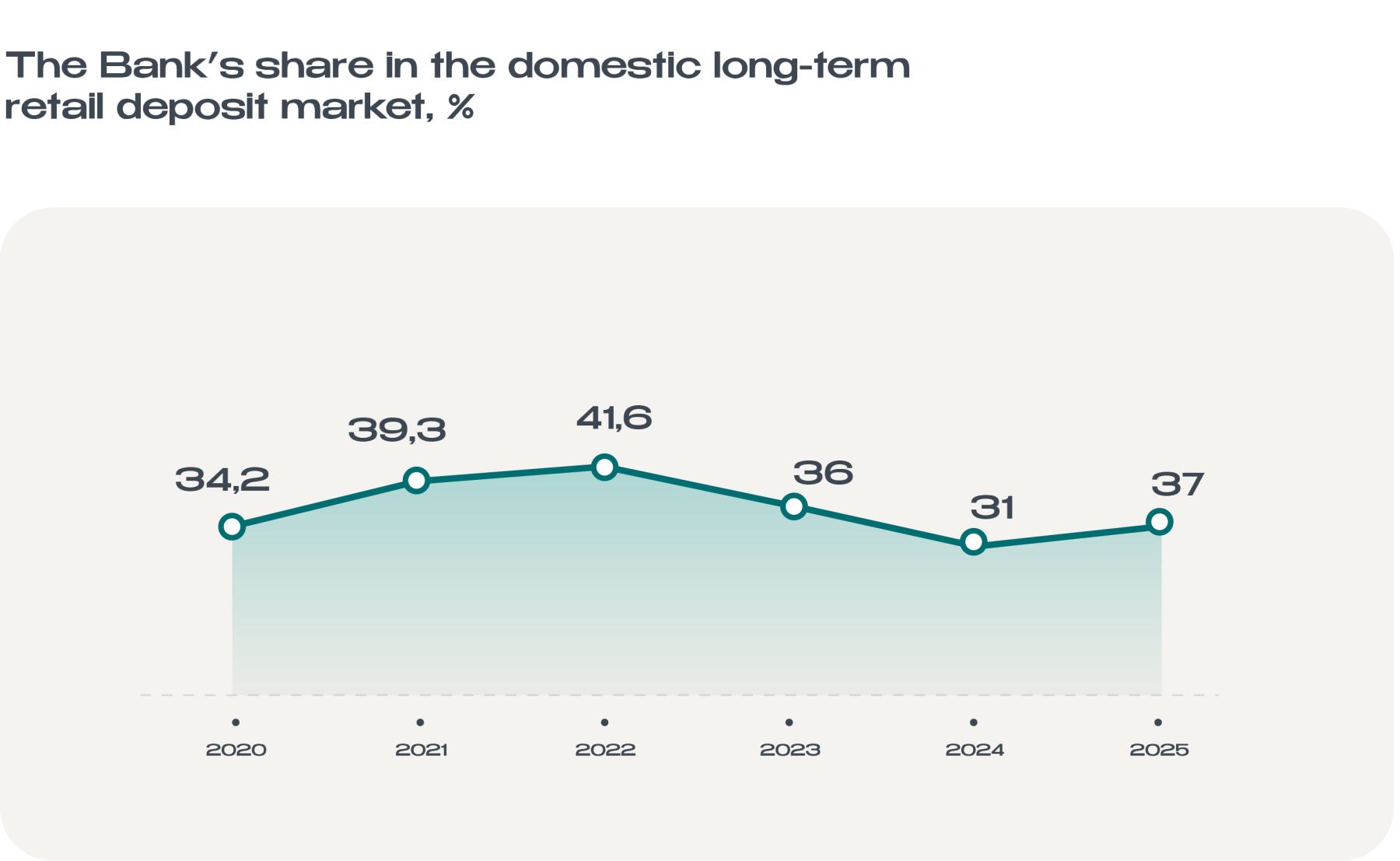
The net profit of the banking sector based on the results of 2025 stood at Tenge 2,724 billion. Meanwhile, the profit of Otbasy Bank based on the results of 2025 amounted to Tenge 126 billion, which is 5% above the plan. The dynamic performance results of Otbasy Bank in 2025 were ensured by its competitive advantages, allowing the Bank to adhere to its successful development strategy.
The moderate growth of activity of STBs and mortgage companies in the market of lending to the population for housing construction and acquisition, as well as the introduction of new state and other programs for construction and providing Kazakhstanis with affordable housing, had a positive impact on the increase in Otbasy Bank's market share and the growing interest in housing construction savings. A stable growth in the number of participants in the housing construction savings system was observed, which, accordingly, led to an increase in the deposit base and the volumes of the Bank's lending to the population.
In comparison with other second-tier banks of the country, the following strengths and weaknesses of the Bank can be identified:
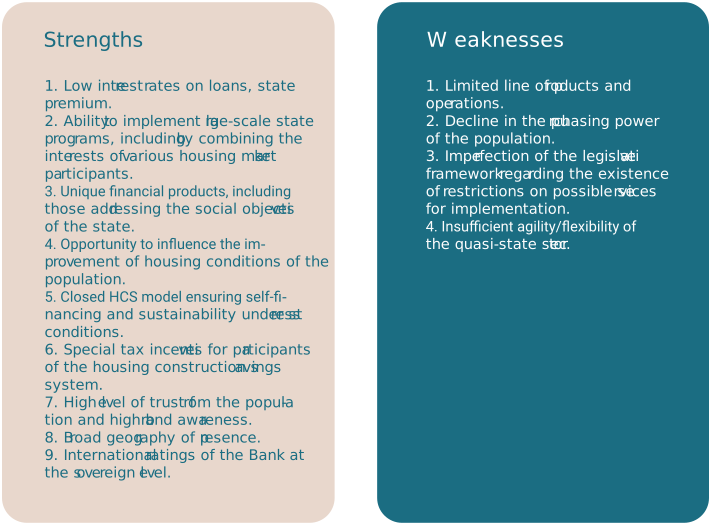
In the long term, the Bank plans to rely on its key advantages to strengthen its market positions while continuing to implement initiatives aimed at eliminating the identified limitations, increasing operational efficiency, and ensuring sustainable development.