

- Home
- /
- Sustainable Development Strategy
Sustainable Development Strategy
In June 2025, the Bank's Board of Directors approved the Sustainable Development Strategy until 2030. As a national development institution, the Bank plays a key role in shaping Kazakhstan's sustainable financial system and improving citizens' quality of life by ensuring access to decent and affordable housing. Being a key participant in the country's housing construction savings system, the Bank views sustainable development as an integral part of its mission – to strengthen the sense of Homeland by providing families with their own homes and enhancing long-term well-being.
The Sustainable Development Strategy until 2030 establishes the integration of ESG (Environmental, Social, Governance) principles into all areas of the Bank's activities – from product development to internal culture and external reporting. The implementation of the Strategy is aimed at contributing to the achievement of the UN Sustainable Development Goals and supporting the socio-economic progress of Kazakhstan.
Key Priorities
Environmental Sustainability. The Bank develops green finance instruments, including green mortgage programs for purchasing energy-efficient housing, and reduces its own environmental impact through energy conservation, digitalization, and the implementation of "Green Office" principles. Greenhouse gas emissions have been calculated for Scope 1 and 2 since 2023, and for Scope 3 since 2024, including financed emissions across the mortgage portfolio.
Social Inclusion and Housing Affordability. The social pillar of the Bank's strategy is implemented by expanding access to affordable mortgage lending for vulnerable populations, developing rent subsidy programs, and utilizing pension savings to improve housing conditions. The Bank aims to increase the share of loans with a targeted social impact and actively cooperates with state and regional partners.
Corporate Responsibility and Governance. Strategy relies on high standards of corporate governance, transparency, and ethics. Special attention is paid to compliance with the principles of responsibility, accountability, and the balance of stakeholders' interests, which helps build trust among investors, clients, and society. The Board of Directors and specialized committees oversee the implementation of the Strategy, environmental and social risk management, and information disclosure.
Risk Management and the Climate Agenda
The Bank has implemented a comprehensive ESG risk management system, including the assessment of physical and transition climate risks and climate stress testing. Environmental and climate factors are integrated into the overall risk management system, thereby enhancing business resilience to changes in the external environment.
Goals and Targets until 2030
Within the framework of the Sustainable Development Strategy, the Bank has defined the following measurable sustainability KPIs:
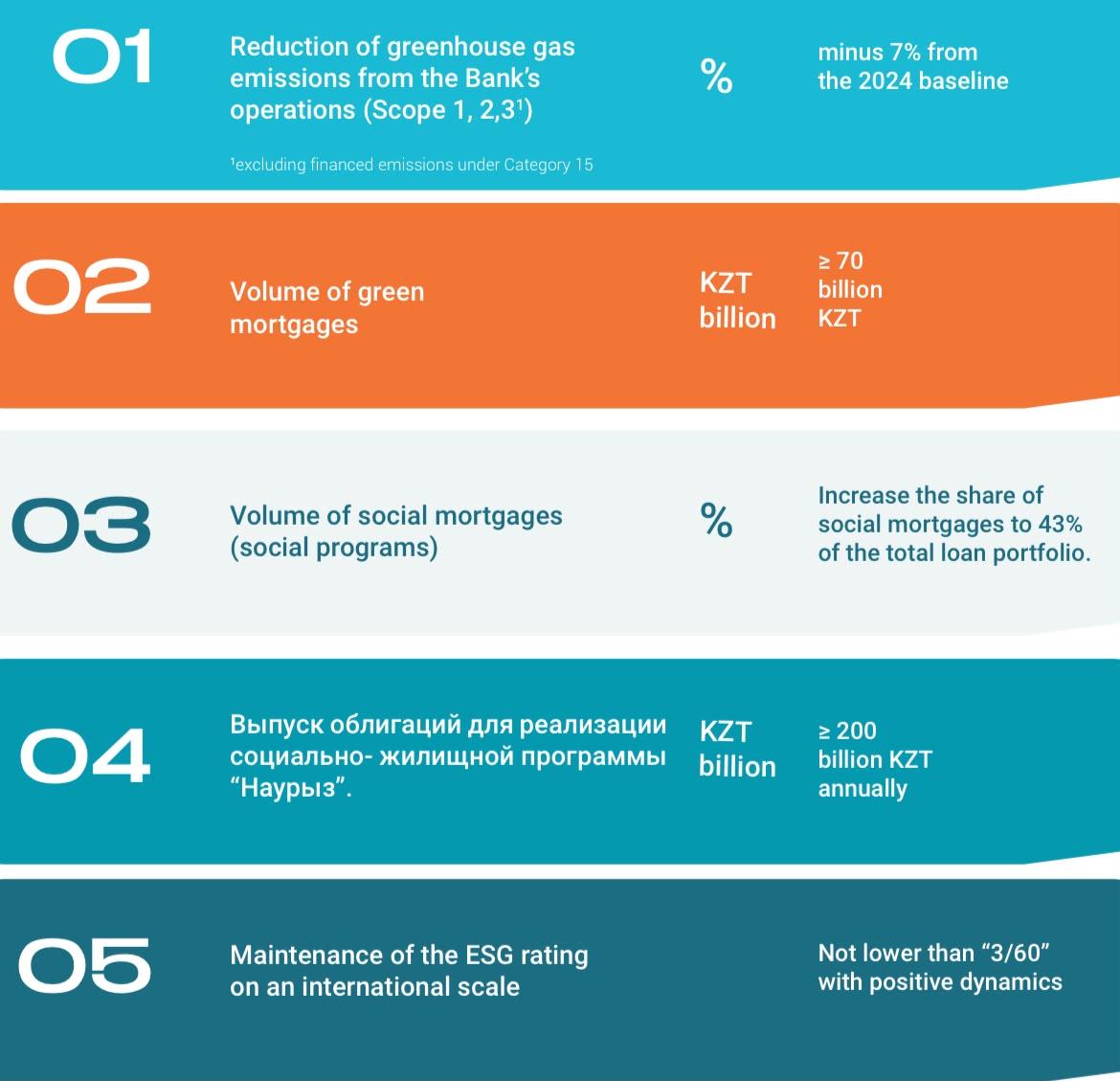
The implementation of sustainability KPIs will allow the Bank to systematically track progress, adjust strategic and operational initiatives, ensure the achievement of sustainable development goals, and enhance sustainable value for all stakeholders.
The Sustainable Development Strategy is integrated into the Bank's business model and reflects a systematic approach to managing the economic, social, and environmental aspects of its activities. Its implementation ensures a balance between financial sustainability, social significance, and environmental responsibility, creating the foundation for the long-term and inclusive development of Kazakhstan.