

- Home
- /
- Energy Consumption and Energy Efficiency
Energy Consumption and Energy Efficiency
The Bank is a financial institution with an extensive branch network. Consequently, to sustain its operations, the Bank requires significant volumes of electrical and thermal energy. The Bank implements energy-saving measures to minimize its environmental footprint and improve operational efficiency. To reduce financial expenditures and conserve electricity, LED lamps with a capacity of 12–60 Watts have been installed in the buildings of the Headquarters and the Bank's branches. The Bank's energy resource consumption is presented in the following tables:
Energy Consumption Within the Organization:

Energy Consumption Outside of the Organization

Consumption Within the Organization:

Consumption Outside of the Organization:
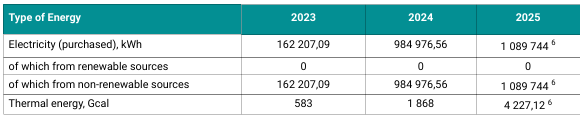
Electricity and thermal energy consumption is calculated based on primary records from the Bank's facilities, including the branch network and the Headquarters building. Electricity is purchased from external suppliers and accounted for based on metering devices.
For leased properties where utilities are included in rental payments and direct accounting data are unavailable, estimated values calculated on the basis of available analytical and accounting data are used. Available analytical and accounting data include information from lease agreements, utility payments, data from landlords or property management companies, as well as information on the square footage and period of use of the leased premises.
In 2025, electricity consumption increased by 21% compared to 2024 and amounted to 3 588 192 kWh. This growth was driven by the acquisition of a building to accommodate the Headquarters in Astana during the reporting year. This building also hosts 11 tenants across a total area of 9 089.2 m², which contributed to the increase in the Bank's total electricity consumption.
Consumption of natural gas, diesel fuel, and gasoline is calculated based on primary records from the Bank's facilities. Natural gas is used to provide thermal energy and is accounted for based on supplier data and metering devices. Diesel fuel is used for the operation of diesel generator sets (DGS) and is tracked based on fuel accounting records. Gasoline consumption for vehicles is determined based on refueling data and accounting logs.
For facilities and activities where direct accounting data is unavailable, estimated values calculated on the basis of available analytical and accounting data are used. Available analytical and accounting data include supplier information, metering device data (where available), fuel procurement and usage logs, vehicle refueling records, as well as the Bank's internal accounting data for the respective facilities and activities.
The Bank's thermal energy consumption in 2025 increased by 82% compared to the previous year and amounted to 10 183.04 Gcal. The main driver of this growth was the acquisition of the Headquarters building in Astana, which led to an increase in the total heated area and, consequently, the volume of thermal energy consumed.
The Bank is conscious of the impact of its operational activities on energy consumption and strives to reduce its carbon footprint by improving energy efficiency. Among the priority measures are the phased replacement of conventional lighting with LED alternatives and the implementation of automated lighting control systems.
In order to mitigate environmental impacts and ensure the rational use of natural resources, the Bank plans to install automatic lighting control systems (motion sensors) in the corridors of 10 branches in 2026. The implementation of this initiative will reduce electricity consumption and enhance the overall energy efficiency of the Bank's facilities.
6 The energy consumption figures presented in this Report differ from the corresponding indicators disclosed in the Holding’s 2025 Sustainability Report due to the use of estimated values for certain facilities where primary supporting documentation was unavailable. The estimates were calculated based on the assumptions adopted under the applicable calculation methodology and were subject to independent assurance by PwC.